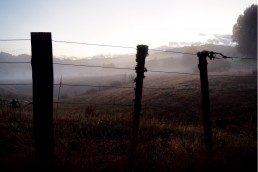
It has been quiet here for a while. But this one I really want to share, because it brings together three things that mean a lot to me: New Zealand, long walks in the mountains, and two people who were there right at the very start of my journey.
For quite some time now I have been supporting the Ruahine Whio Protectors, a conservation project in New Zealand that fights for one of the country’s rarest birds. Earlier this year Te Araroa published a wonderful article about the people behind it, and about how a hut in a backyard, a blue duck and a very long trail all belong together: A rare bird, a hut, and a renewing trail. My birthday party somehow made it in there as well. So here is the story from my side.
My very first trail angels
While I was preparing for the Te Araroa I came across the blog of Anthony and Fiona from Palmerston North. They sent me their trail notes and a lot of useful information, and offered me a place to stay when I came through. For three months they followed my blog from a distance, and when I finally reached Palmerston North we met in person. My very first trail angels. Coffee in town, a great evening, and my name carved into their TA bench next to Ben’s.

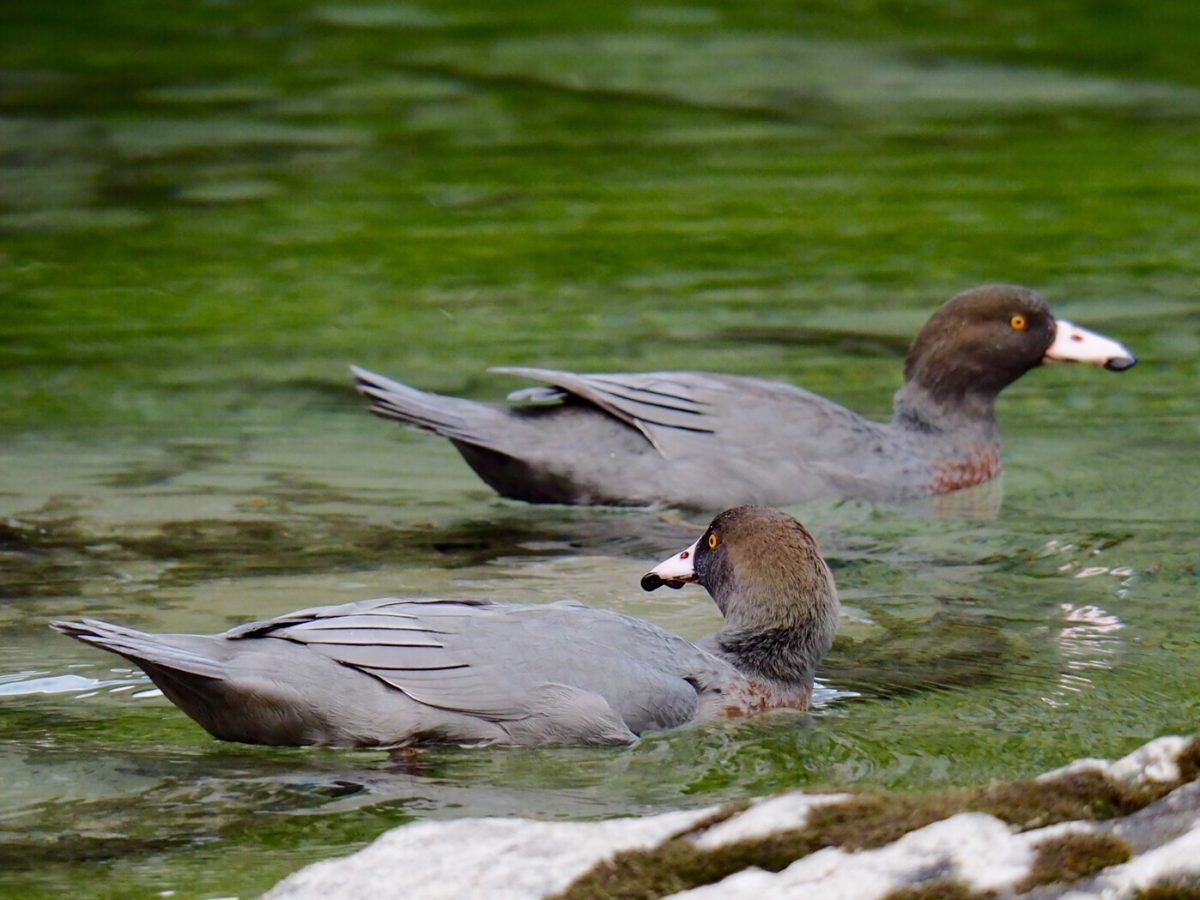
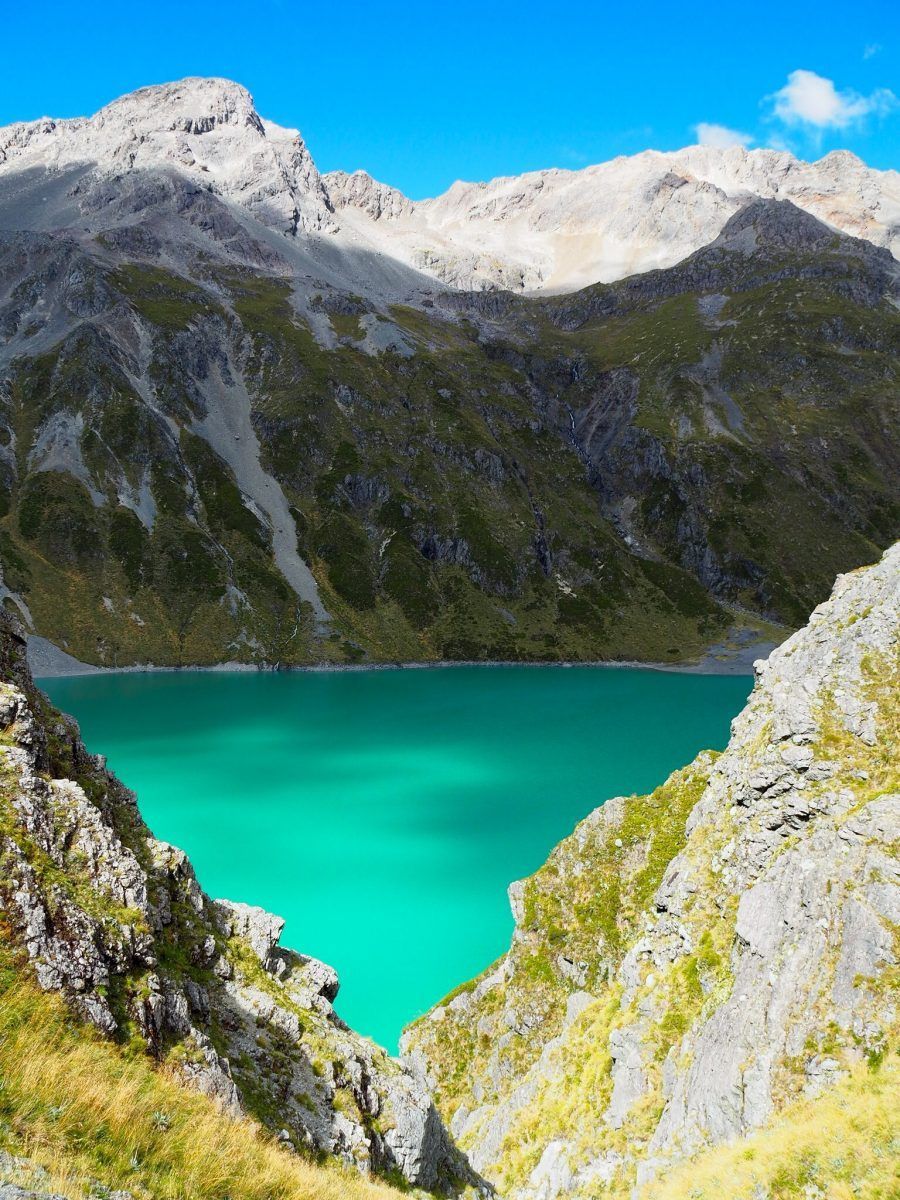
What I only slowly understood back then: for these two, the trail and conservation had always been the same story. A few weeks before, on the South Island, we were having dinner at Blue Lake and drinking a bottle of wine hobo-style when a pair of blue ducks just stopped by. I posted the pictures with “special greetings to Anthony & Fiona”. That quiet, almost accidental moment was the beginning of my connection to this bird.
Why a duck?
The whio, or blue duck, lives only in New Zealand, in fast clean mountain rivers. There are only around 3,000 of them left. Like many native birds in New Zealand it evolved without any land-based predators, and then stoats, rats, weasels and ferrets arrived. It is a hard thing to learn as a hiker: the wilderness that looks so pristine is under constant attack. In the Tararua Range the whio had disappeared by the 1970s.
Anthony and Fiona work on this as volunteer trappers in the Ruahine Range, on trap lines they reach on foot and sometimes by helicopter. Their numbers are impressive: about 200 traps and about 4,500 predators removed. And there is real hope. About five years ago a whio made its own way from the Ruahine to the Tararua. If more birds survive, more of them can follow.
A hut, a duck and a very good idea
Fiona also built Whiowhio Hut in their garden, a replica DOC hut in proper rescue orange, including a real intentions book and orange triangles leading to it. It sits just off the trail, roughly at the midpoint of the 3,000 km. Around 1,000 walkers have stayed there since 2017, 160 of them in the last season alone. Every bit of the koha, the donation hikers leave, goes straight to protecting whio.
According to the article, this hut even played a part in how Te Araroa thinks about itself today. Chief executive Matt Claridge credits a chat with Anthony as the starting point of Whakahou, the trail’s strategy of renewal and giving back:
It’s about giving more than you take, and that Te Araroa can contribute, always, to making everything a little bit better.
Matt Claridge, Te Araroa
A slightly unreasonable birthday idea
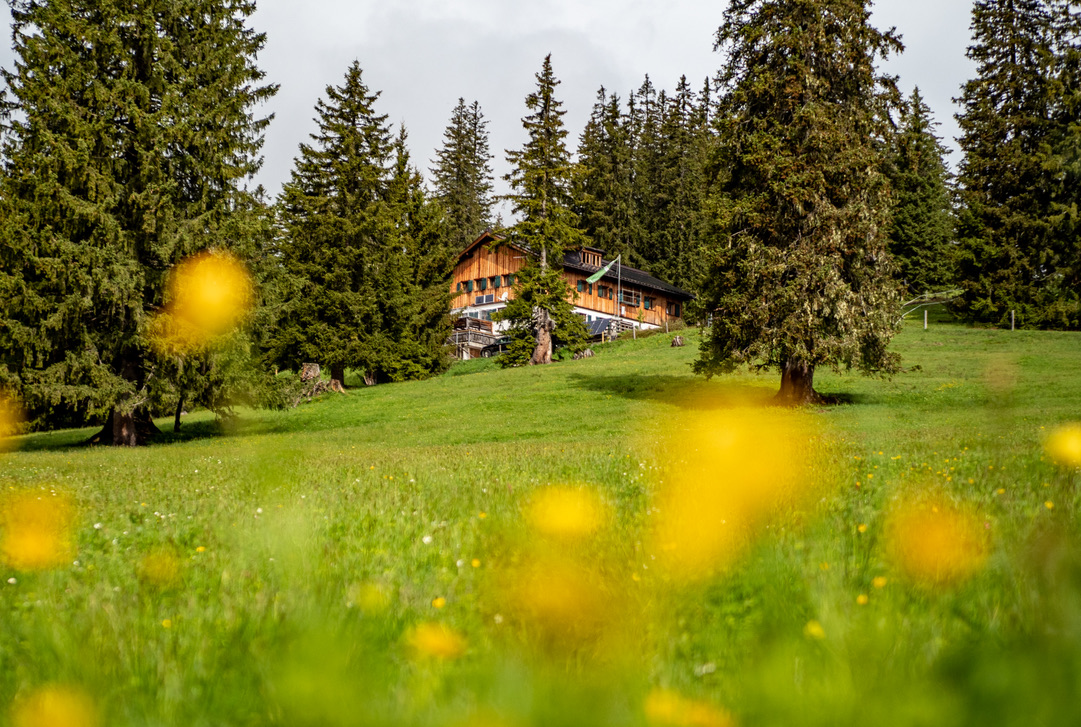
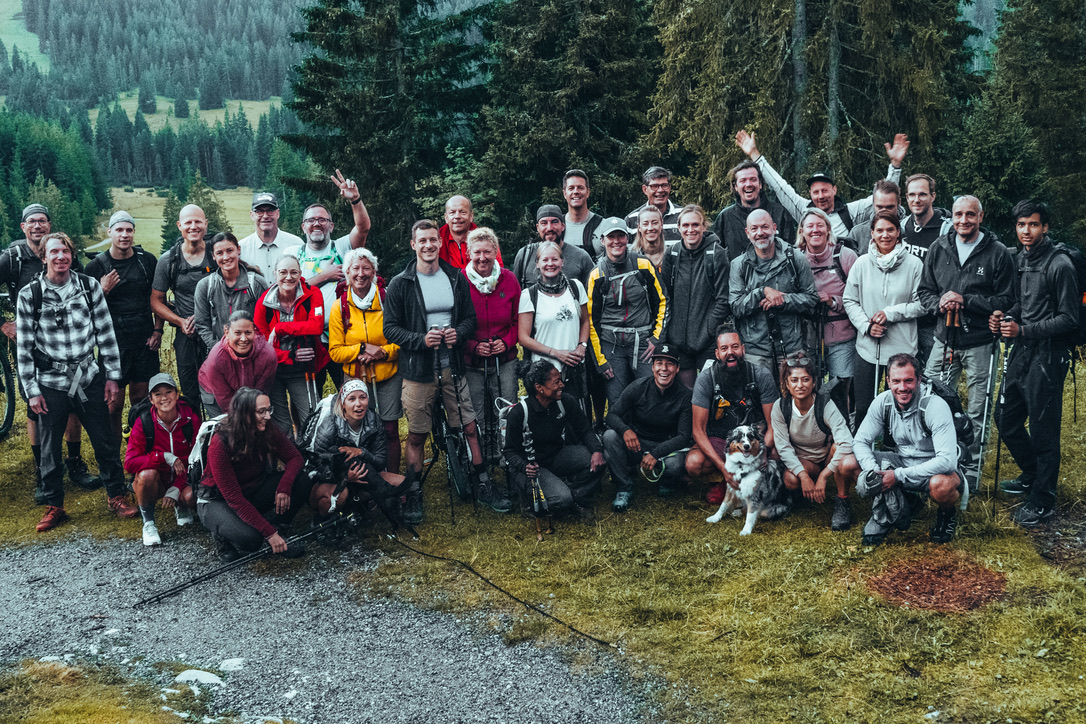
And this is where I come in. For my 40th birthday I invited friends to a remote mountain hut in the Austrian Alps: wooden bunk beds, no mobile reception, and no road. Everyone had to hike in. Nearly 70 people showed up. We spent the weekend hiking, cooking together and crossing a long ridgeline that was just demanding enough to make everyone question my sanity, and then thank me for it afterwards.
Instead of presents I asked everyone to donate to the whio project. After hours of hiking, shared food, sore legs and a few beers in a hut without distractions, the idea landed surprisingly easily. The money wasn’t disappearing into a vague cause. It was going to real people, in a real place, doing very real work. Together we raised $4,500.
About $4,000 of it paid for eDNA sample kits from a company called Wilderlab. eDNA stands for environmental DNA: animals leave traces of their DNA in the water, so a simple water sample can show what lives in a river without anyone having to see it. In the article you can see Holly Darton taking one of these samples from the Mākāretu Stream in the Ruahine. What came out of the samples? According to the article, that’s another story. I can’t wait to read it.
Why I do this
New Zealand has a very special place in my heart. The Te Araroa gave me far more than incredible landscapes. It gave me trust, kindness and the feeling of being welcome, even as a stranger passing through. From trail angels to spontaneous conversations, I experienced a generosity that stays with you long after the blisters are gone. Supporting conservation there is my small way of saying thank you.
And it didn’t feel like a big statement. It just felt like a natural extension of what the mountains, in Austria or in New Zealand, tend to teach you: good things happen when you move through landscapes with respect, curiosity and a bit of humility.
If you want to know more or help
- Read the whole article, it is worth it: A rare bird, a hut, and a renewing trail
- Find out more about the project and how to donate or volunteer: Ruahine Whio Protectors
- Walking the Te Araroa? Stay at Whiowhio Hut and say hi to Anthony and Fiona from me
- Follow the conservation work: Manaaki Ruahine on Facebook
Thank you, Anthony and Fiona. You were the first trail angels I ever had, and you are still showing me what giving back looks like.